The Văn Miếu of Diên Khánh
Our own score, not an average of guest reviews
One of the few provincial Confucian temples left in south-central Vietnam, 1853, 12 km out
- Address
- Khóm Phú Lộc Tây, Diên Khánh town, Khánh Hoà — 1.1 km from the Diên Khánh citadel
- Opening hours
- No published hours; usually locked outside festival days, with the grounds visible from outside
- Price range
- Free
- Best time to go
- Mornings, paired with the citadel
On the map
Map © OpenStreetMap contributors · 12.2628, 109.0872
Overview
Everyone knows the Văn Miếu in Hanoi. Few know that every trấn under the Nguyễn had its own Confucian temple, and that very few survive in south-central Vietnam. Diên Khánh's is one of them — at khóm Phú Lộc Tây in Diên Khánh town, about 12 km west of central Nha Trang and 1.1 km from the citadel.
Two dates matter. Its predecessor was the Bình Hoà trấn temple, founded in the second year of Gia Long, 1803 — the same moment the Nguyễn were rebuilding their administration after unification. The present building was rebuilt in 1853, and on 15 October 1998 the Ministry of Culture listed it as a national historical and cultural monument.
Why a provincial Confucian temple is worth the ride: it is physical proof that Diên Khánh was once the capital, not a suburb. These temples were built only at a trấn's seat, beside the school and the officials' ritual ground. Seeing the temple and the citadel in one morning makes the claim on the citadel's own marker — that this was the administrative, political and cultural centre of Khánh Hoà — much easier to believe.
Do this first
This is not a staffed attraction. The temple is usually locked outside festival days, and there is no English interpretation. If the door is shut you can still see the grounds and the roof from outside. Go in the morning and ask at a nearby drinks stall — in Diên Khánh, asking still works better than searching.
In the same trip: the Diên Khánh cluster covers all nine sites around the citadel, the citadel is 1.1 km away, and Am Chúa lies further north if you have the time.
Don't miss
- One of the few provincial Confucian temples left in south-central Vietnam
- Founded 1803 as the Bình Hoà temple; the present building rebuilt 1853
- Listed as a national monument on 15 October 1998
- 1.1 km from the citadel, so both fit in one morning
Practical tips
- Usually locked — the view from outside is enough on an ordinary day
- No English interpretation, so read up before you go
- Pair it with the citadel and the old-capital story finally makes sense
Frequently asked
What is there to see at the Văn Miếu of Diên Khánh?
A Nguyễn-era temple compound: a stele pavilion in front, a wooden fore-hall and main hall, a brick wall around. Far smaller than Hanoi's — this is a provincial temple, not an imperial academy. What is worth seeing is that it is still here: very few provincial Confucian temples survive in south-central Vietnam.
How do you get there from Nha Trang?
About 12 km west on đường 23/10, roughly 25–30 minutes by motorbike, then into Diên Khánh town. No bus serves the route any more — see the bus page. The coordinate 12.26280 / 109.08723 pastes straight into Maps.
This page also appears in
Closest to here
1.1 km away
Attractions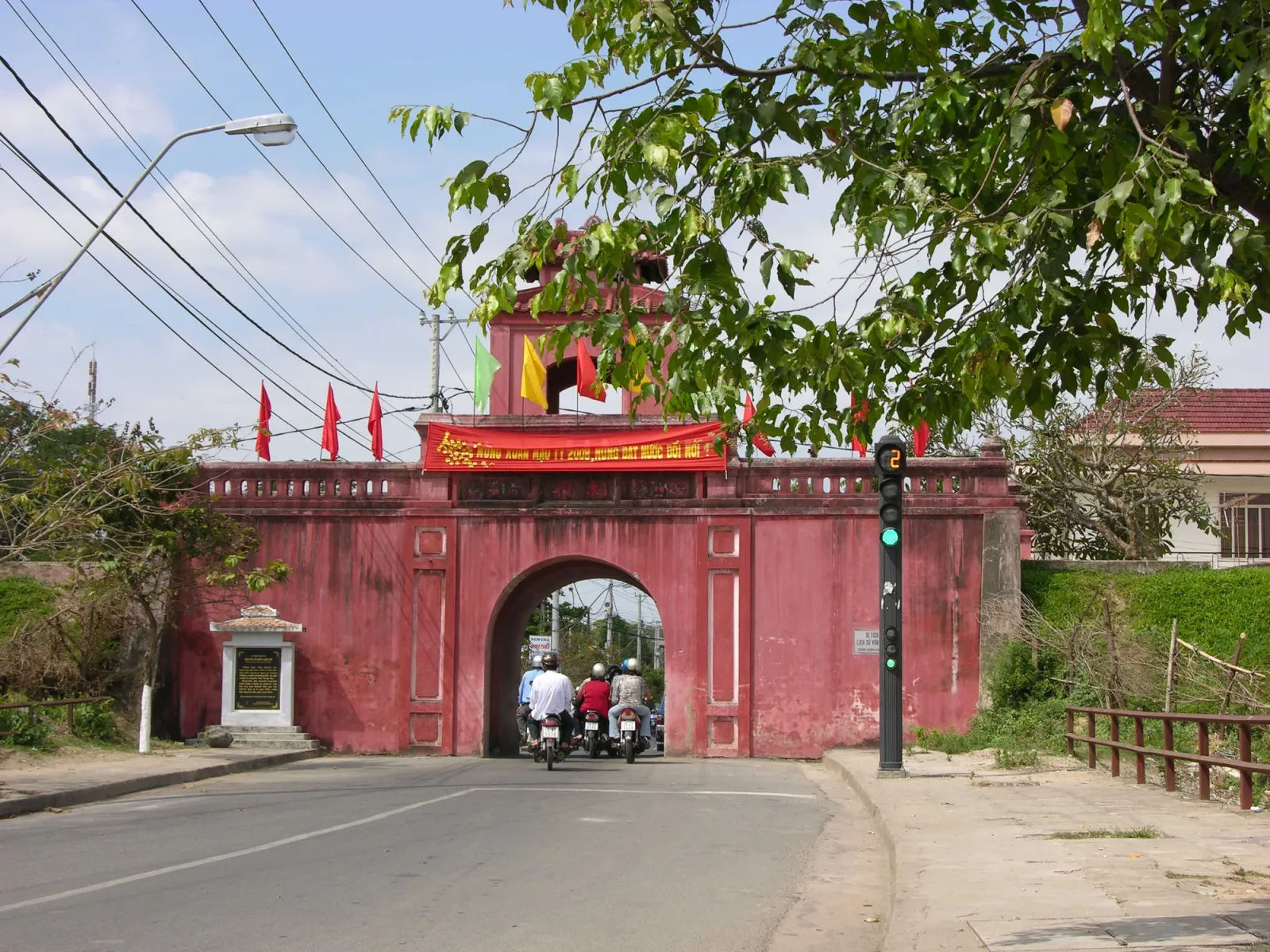
Dien Khanh Citadel
Rating: 4.0 / 5 — Our own score, not an average of guest reviewsA Vauban fort from 1793, 10 km out, and traffic still runs through its gates
City centreFree4.8 km away
AttractionsAm Chúa
Rating: 3.7 / 5 — Our own score, not an average of guest reviewsThe other end of the Thiên Y A Na cult, on Đại An hill — what the Po Nagar towers leave out
City centreFree4.8 km away
Attractions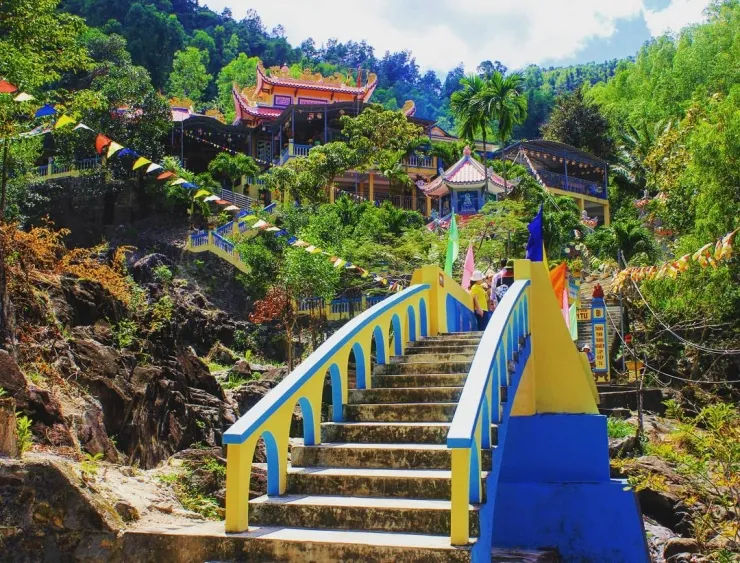
Suoi Do Pagoda
Rating: 4.1 / 5 — Our own score, not an average of guest reviewsShrines up a hillside with a stream falling through them. 11 km out, not 30
City centreFree